Blog #196: Why “Fiddler on the Roof” (1971) is a Representation of What Happens When Rou
- Jeffrey Snyder

- Mar 7, 2022
- 3 min read
“A Fiddler on the Roof. Sounds crazy, no? Here, in our little village of Anatevka, you might say every one of us is a fiddler on the roof…trying to scratch out a pleasant simple tune without breaking his neck?”
“And how do we keep our balance? That I can tell you in one word…TRADITION!”
…
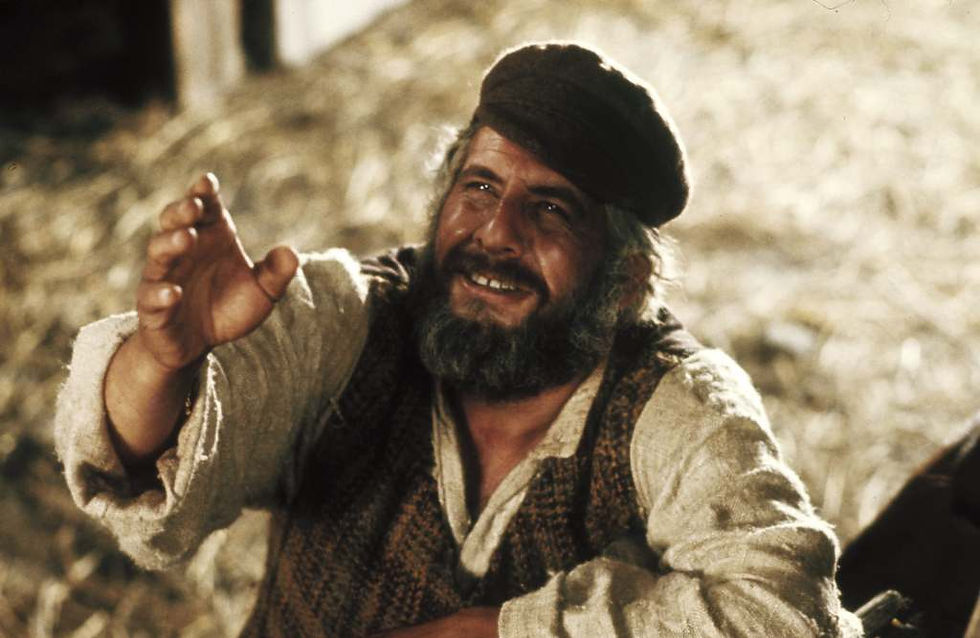
Topol as Tevye in “Fiddler on the Roof” (1971)
If you are big into Broadway, then you know very well as much as I do about the film adaptation of “Fiddler on the Roof” (1971) starring Topol and Norma Crane about Jewish life in 1900’s Russia. This is a story of more than just what life is like at the turn of the century, this is a story about what happens when our routines and are disrupted.
Tevye (Topol) is a man who lives amongst a community that relies heavily on tradition because as he puts it, his village has traditions for everything ranging from how to sleep to how they dress such as always keeping their heads covered to wearing a prayer shawl that shows their constant devotion to God.
…
But the big tradition that they have is having a matchmaker decide who marries who. Of course, when Tevye’s three eldest daughters choose their own suitors, Tevye naturally doesn’t take it very well. This is very common amongst neurodiverse individuals when their routines and traditions are disrupted.
As you know, I had a very rough transition when I was going from High School to Real Life. I had to learn how to be flexible and let go of my “traditions” in order to survive in the real world. As a juxtaposition, I was actually heavily involved in “Fiddler on the Roof” (1971) during my senior year of high school. So, I had the premonition of what I was going to be expecting.
…
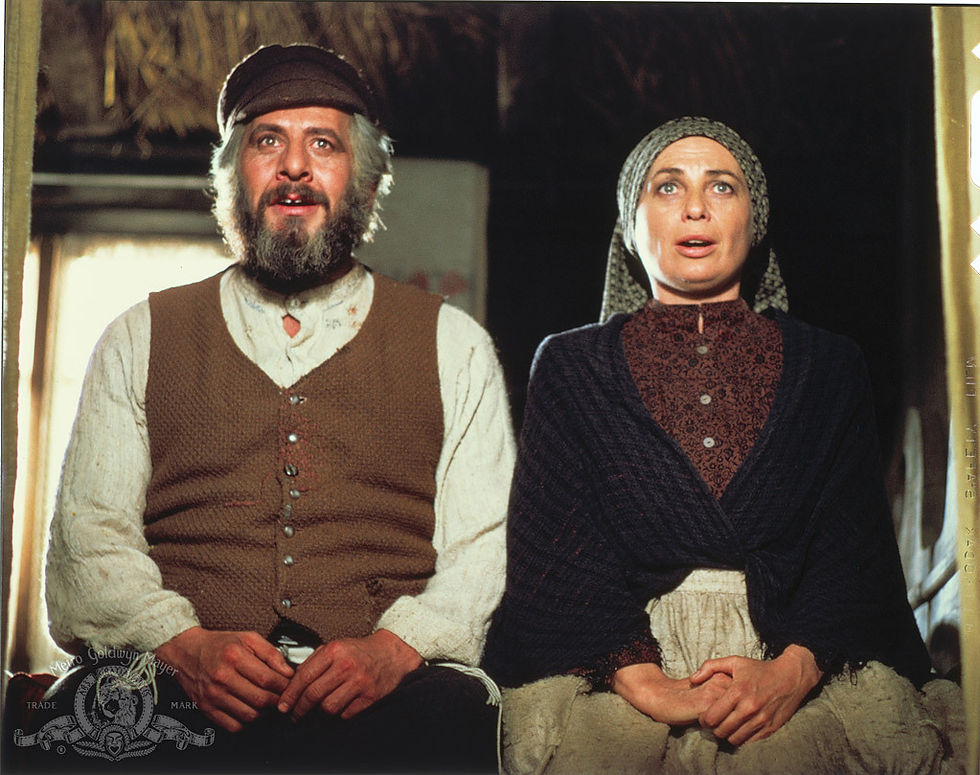
Topol and Norma Crane as Tevye and Golde in “Fiddler on the Roof” (1971)
Something that I take very deep notice of that I can relate to Tevye is the fact that when his tradition and routine are disrupted at first because of his eldest daughter, Tzietel, he can only think of what happens now that his world is falling apart. When we neurodiverse individuals struggle with falling traditions, its how we react that makes the difference.
In a way, that makes us selfish in the eyes of others around us. When we have routines and traditions disrupted, we are always looking for someone or something to blame. We can also be in denial as Tevye displays when Tzietel breaks away from tradition to marry Motel, the tailor (of whom he and Golde end up becoming grandparents to their own child) or when his second eldest, Hodel, marries Perchik from Kiev, but he naturally gets over it in the end.
…
Over the course of the film, we see Tevye start to become more flexible in the grandest of traditions in his village, but even if we are willing to be flexible, there are some boundaries we cannot cross in the case of his third eldest, Chava, who wishes to marry someone outside of the faith named Fyedka that ends up causing her to be disowned by Tevye.
…
But what makes Tevye stand out and relatable to the autism/neurodiversity community is the fact that he just doesn’t understand of what is going on in the world around him and his community. “Fiddler on the Roof” is taking place during a time when traditions are being broken and a new wave is coming in, but the community does not know this is happening until it is too late when they are ordered to leave Anatevka by order of the Russian Tsar, Nicholas II.
…
The lesson here is that we just can’t turn a blind eye to the physical presence we are in. Sure, we can keep our traditions, but that just what they are…traditions and routines. If the physical world is changing, we must change along with it in order to survive in that physical world. For autistic/neurodiverse individuals, its easier said than done and that is why something like “Fiddler on the Roof” teaches us.
This is why I strongly encourage schools at the high school level for both special and general education to embrace showing something like “Fiddler on the Roof” to students because it sends a strong message not just on an educational standpoint, but also a life lesson kind of standpoint.
…
Catch you all later!!


Comments